

The most sustainable outfit is the one you already own
Wearing what you own, buying to keep, and what rewearing really saves. An honest look at clothes and the planet, with every number sourced.
By Chloé Sasaa · 27 October 2026 · 12 min read
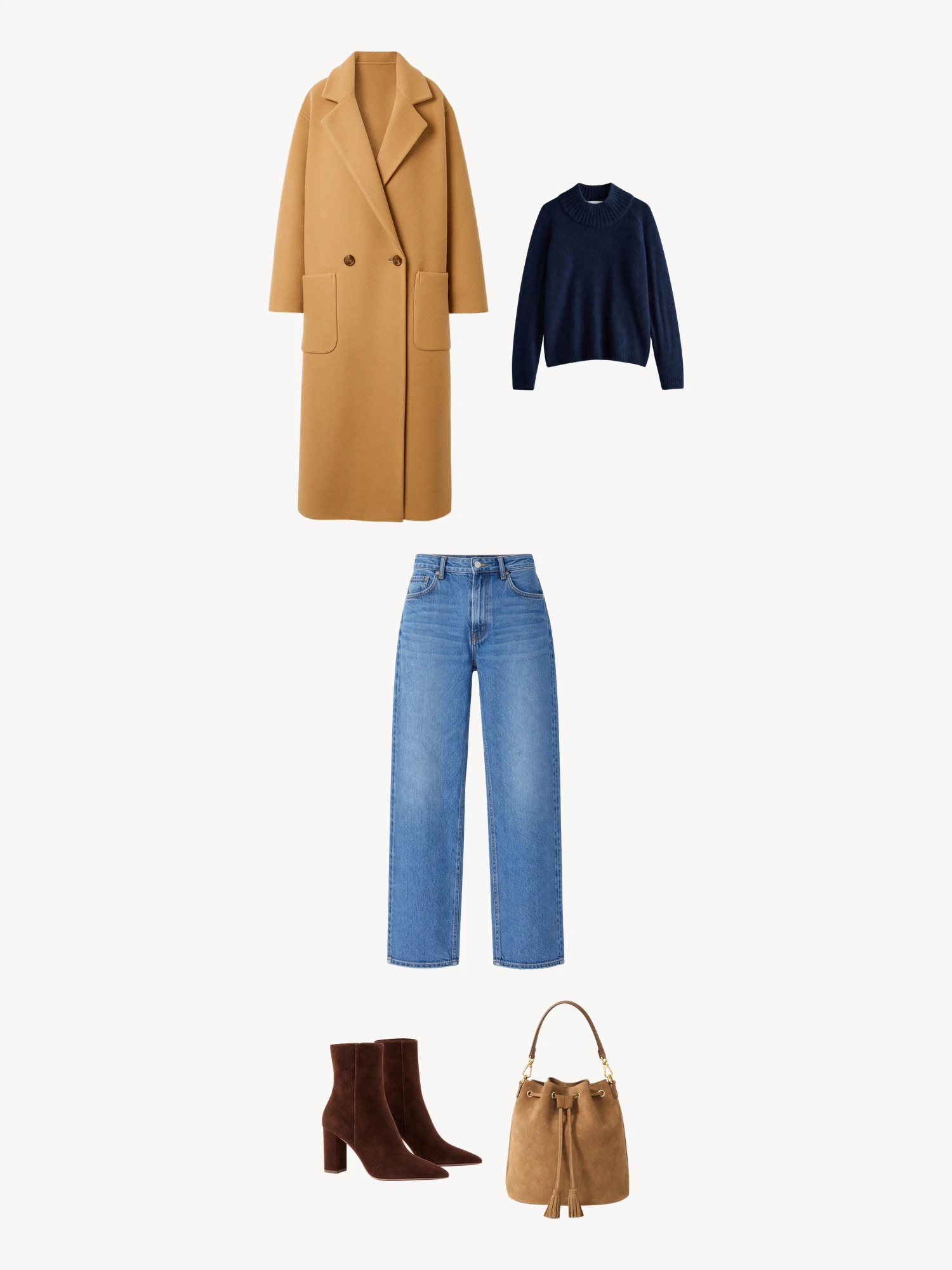
Camel coat, navy knit, jeans, brown ankle boots and a suede bucket bag.
Sustainable fashion can feel like a lot.
There are new fabrics to learn about, labels to check, certifications to understand, brands to research, and a quiet pressure to replace everything you own with something greener. It can start to feel like being sustainable is one more thing to buy.
I want to offer a simpler place to start. Before any of that, before a single new purchase, there’s something you can do today that makes a real difference. Wear what you already own. Wear it often. Look after it. And when you do buy, buy to keep.
That’s not the whole answer to fashion’s impact on the planet. But it’s the part that sits in your own wardrobe, and it’s much bigger than it sounds.
How we got here
It helps to start with how much has changed, and how quickly.
In 2016, McKinsey looked at how people bought clothes between 2000 and 2014. Over that period, the average shopper came to buy about 60 per cent more clothing, and to keep each piece about half as long.
More clothes, worn for less time. That isn’t because people suddenly stopped caring. It’s because clothes became cheaper, faster and easier to buy than ever before. New collections arrived constantly. A purchase took a few taps. And the distance between wanting something and owning it almost disappeared.
The trouble is that the clothes don’t disappear when we stop wearing them. They go somewhere.
Where the clothes go
Some of the numbers here are big enough to be hard to picture, so I’ll take them slowly.
The Ellen MacArthur Foundation, in its 2017 report A New Textiles Economy, found that the equivalent of one rubbish truck of textiles is landfilled or burned every second. Every second. By the time you’ve read this paragraph, several trucks’ worth have gone.
Across the world, the Global Fashion Agenda and Boston Consulting Group estimated in 2017 that about 92 million tonnes of textile waste are produced each year.
A lot of used clothing also travels. According to the European Environment Agency, the European Union exports about 1.4 million tonnes of used clothing a year, up from around 550,000 tonnes in 2000. Some of it is worn again by someone else, which is a good thing. But not all of it can be. Some ends up far from where it was bought. In Chile’s Atacama Desert, for example, tens of thousands of tonnes of unwanted clothing have ended up in dumps, at least 39,000 tonnes by one estimate reported by AFP in 2021.
I don’t share these numbers to make anyone feel guilty. Nobody reading this personally filled a truck. These are the results of a whole system, and the system needs to change in many ways that no single wardrobe can fix.
But it does tell us something useful. The fewer clothes that leave our lives early, the less of this there is. And that part, at least, starts at home.
The fewer clothes that leave our lives early, the less of this there is.
The surprisingly powerful thing: wearing it again
Here’s the number I come back to more than any other, because it’s the one that tells you what to do.
In 2012, WRAP, the UK’s waste and resources programme, ran a large study called Valuing Our Clothes, with nearly eight thousand adults. It found that keeping clothes in active use for nine months longer cuts their carbon, water and waste footprints by 20 to 30 per cent each.
Nine months. Not a lifetime of sacrifice. Not a complete new way of living. Just wearing the clothes you have for a little longer before they leave.
That’s why rewearing matters so much. By the time a piece of clothing reaches you, it has already been made: the fibre grown or produced, spun, dyed, sewn and shipped. None of that can be undone. What can still change is how much use comes out of it. Every extra wear is more value from something the planet has already paid for.
The most sustainable outfit really is, very often, the one already hanging in your wardrobe.
The quiet third
If wearing what we own is so helpful, why don’t we do more of it?
Part of the answer is that we can’t always see what we own. The same WRAP study found that around 30 per cent of the clothing in people’s wardrobes hadn’t been worn for at least a year. A much more recent survey, by Vestiaire Collective in 2026 with more than five thousand people, found that people underestimate what’s in their own wardrobe by about 40 per cent, and that 84 per cent say they have nothing to wear while owning more than a hundred items.
Put those together and a picture appears. Most of us aren’t short of clothes. We’re short of a clear view of them. And a piece you’ve forgotten you own is very easy to replace with something new.
So one of the most sustainable things you can do is surprisingly simple: get to know your wardrobe again. Bring forgotten pieces back to the front. Find new ways to wear what you already have. Every piece that comes back into your life is one less piece that needs to be bought.
Why buying greener isn’t the first step
When people decide to be more sustainable with clothes, the first instinct is often to replace things. Out with the old, in with the organic cotton, the recycled fibres, the brand with the good story.
Those choices can matter when you genuinely need something new. But replacing clothes that still work, in order to feel more sustainable, quietly undoes the point. The pieces you already own have already been made. Sending them away early, even to make room for better ones, means their life was shorter than it could have been.
So the order matters. First, wear what you have. Then, when something truly needs replacing, replace it thoughtfully. The greenest new purchase is still a second step, never the first.
Rewearing isn’t boring
There’s a stubborn idea that wearing the same things often is somehow a failure of style. That a good wardrobe means a different outfit every day, and being seen twice in the same thing is something to avoid.
I’d gently disagree. Some of the best dressed people anyone knows wear the same few pieces again and again, because those pieces work. Repeating what suits you isn’t a lack of imagination. It’s knowing yourself.
And honestly, most people don’t notice. They’re far too busy thinking about their own outfits. The jacket you love can be your jacket for years, and the only person counting is you. Let it become part of how people recognise you.
Buying to keep
None of this means never buying anything. Clothes wear out, lives change, real gaps appear. And buying something you love is one of life’s genuine pleasures.
The shift is in how we buy. Buy to keep, not to throw away.
That means choosing pieces you’ll wear many times, not once. It means asking whether something does a job that nothing you own already does. It means looking at how something is made, and whether it will survive the way you actually wash and wear your clothes. And it means picturing it with several things you already own, so it becomes part of your wardrobe instead of a lonely piece waiting for an outfit.
A piece bought with care and worn for years is a very different thing from a piece bought on impulse and worn twice. The first quietly spreads its impact over hundreds of days. The second takes its whole cost and gives very little back.
Caring for what you have
Making clothes last is partly about choosing well and partly about looking after them. A few small habits make a real difference.
Wash less, and more gently. Many clothes don’t need washing after every wear. Airing a jumper overnight often does the job. When you do wash, cooler temperatures and gentler cycles are kinder to fabric.
Mend early. A loose button, a small tear, a falling hem. Fixed early, they take minutes. Left alone, they can end a garment’s life. Many towns have tailors and repair services, and plenty of small fixes can be learned at home.
Store things well. Fold heavy knits rather than hanging them, so they keep their shape. Give clothes a little room to breathe. Protect special pieces from moths and damp.
Rest your shoes. Giving shoes a day off between wears helps them last much longer.
Read the care label once. It takes ten seconds when a piece is new, and it can save it from one wash that would have ruined it. Some fabrics simply need a little more gentleness than others, and knowing which ones is half the battle.
None of this is complicated. It’s just a habit of treating clothes as things worth keeping.
When it’s time to let go
Every piece eventually reaches the end of its time with you. When that happens, there are better and worse ways to let it go.
If it’s still in good condition, it may have a whole second life with someone else. Selling it, giving it to a friend or passing it to someone who will wear it means it keeps doing its job. If it’s worn out, look for proper textile recycling rather than the bin.
And it’s worth saying gently: giving clothes away isn’t a way to make them disappear. As the export numbers above show, not everything given away can be worn again. So the most helpful order is still the same. Wear it as long as you can. Care for it. Pass it on when you’re truly finished. And recycle what can’t be worn.
Where WATOWEAR fits in
This is close to the heart of why WATOWEAR exists.
Chloé works from the clothes you already own. When you ask what to wear, she builds the outfit from your wardrobe, including the pieces you’d forgotten about. When you’re thinking of buying something, she can tell you whether something you own already does that job. And capsules help you get more outfits from fewer pieces, for a week, a trip or a season.
When there really is a gap, the app can help you fill it. If you buy through us we may earn a commission, and it never changes what you pay. But buying is always the last step, never the first. The first answer is always something you already have.
What you can do this week
You don’t need a dramatic change. Small things, repeated, add up.
Rediscover five pieces. Find five things you haven’t worn in months and wear each of them once this week.
Try one new combination. Put together two pieces you’ve never worn together. Often an old piece only needed a new partner.
Fix one thing. That button, that hem, that small hole. Bring one piece back into use.
Pause one purchase. Next time you’re about to buy, wait a day and ask whether you’ll still want it in a year.
Pass one thing on. Something you truly won’t wear again, to someone who will.
Notice how it feels. At the end of the week, think about which of these was easiest and which you enjoyed. Keep doing that one. Habits that feel good are the ones that last.
Where Chloé comes in
The most useful thing WATOWEAR can do for the planet is help you wear what you already have.
Chloé builds outfits from your own clothes, including the ones you had forgotten. Your numbers show what rewearing has saved, counted from ADEME’s figures for making each kind of garment.
And before you buy, she can tell you whether something you own already does the job. Often, the answer is already in your wardrobe.
Small, real, and yours
Fashion’s impact on the planet is a big problem, and it needs big changes from the people who make and sell clothes. That’s true, and it isn’t your job alone.
But your wardrobe is a real part of the story. Every piece you wear again, care for, keep longer and buy thoughtfully makes a difference that’s measured, not imagined. Nine more months of wear can cut a garment’s footprint by a fifth to almost a third.
So start where you are. Open your wardrobe. Wear what you own. Buy to keep.
The most sustainable outfit is very often the one you already have.
- McKinsey and Company, Style that’s sustainable: a new fast-fashion formula, 2016, covering 2000 to 2014: the average shopper buys about 60 per cent more clothing and keeps it about half as long.
- Ellen MacArthur Foundation, A New Textiles Economy, 2017: the equivalent of one rubbish truck of textiles landfilled or burned every second.
- Global Fashion Agenda and Boston Consulting Group, Pulse of the Fashion Industry, 2017: about 92 million tonnes of textile waste a year.
- European Environment Agency, 2023: the European Union exports about 1.4 million tonnes of used clothing a year, up from around 550,000 tonnes in 2000.
- AFP reporting, 2021: at least 39,000 tonnes of clothing in dumps in Chile’s Atacama Desert, by one estimate.
- WRAP, Valuing Our Clothes, 2012, consumer research with 7,950 UK adults: about 30 per cent of clothing unworn for at least a year; nine months more wear cuts carbon, water and waste footprints by 20 to 30 per cent each.
- Vestiaire Collective consumer survey of more than 5,000 people, 2026, reported in Forbes and Retail Brew: 84 per cent say they have nothing to wear while owning more than 100 items; wardrobes underestimated by about 40 per cent.