

Why most capsule wardrobe guides start by selling you clothes
A straight look at the capsule wardrobe format. Where the shopping lists come from, which rules are useful, and what a capsule is actually for.
By Chloé Sasaa · 27 October 2026 · 11 min read
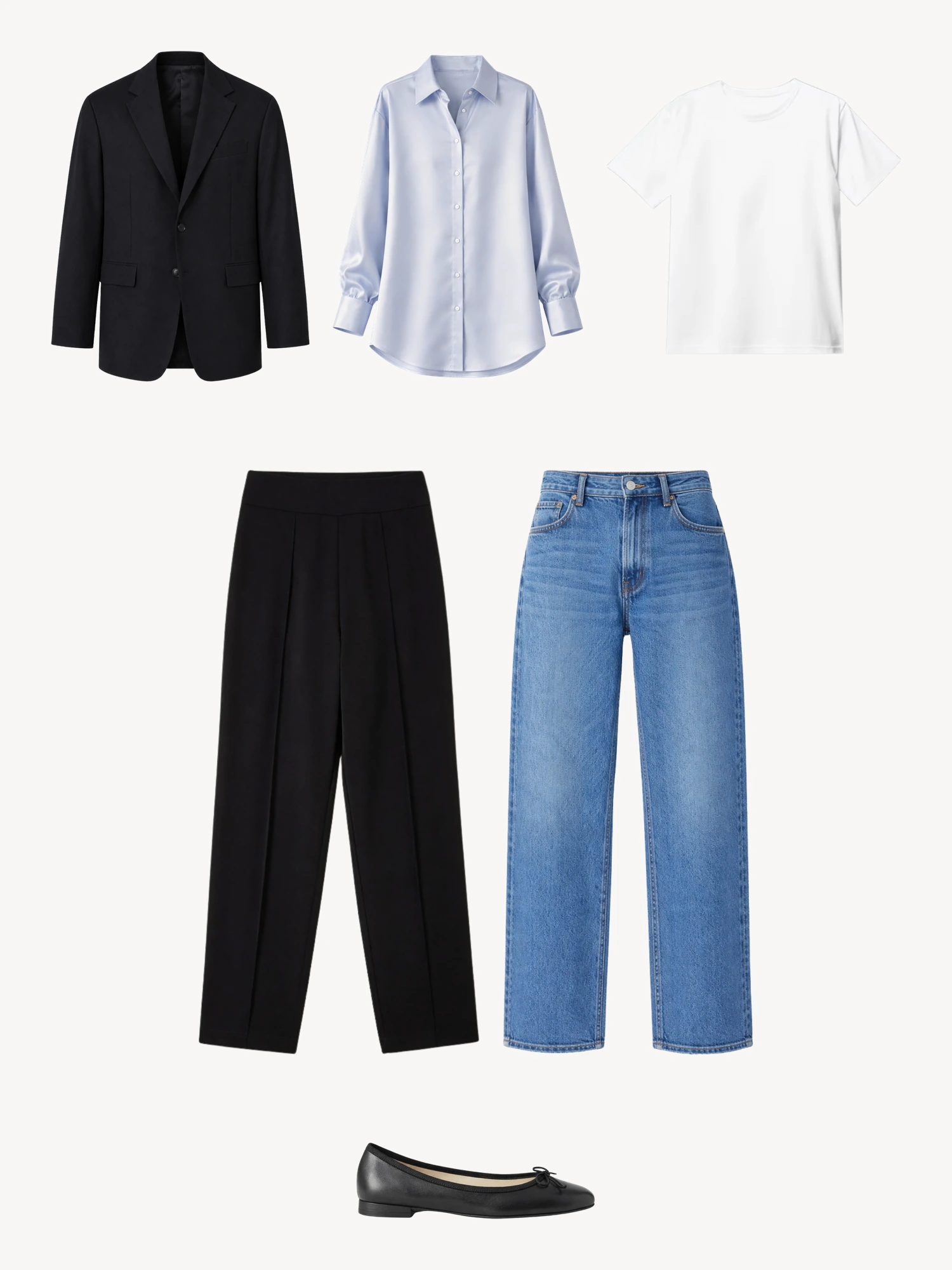
Black blazer, blue shirt, white tee, black trousers, jeans and ballet flats.
Search for capsule wardrobe rules and you’ll find a familiar pattern.
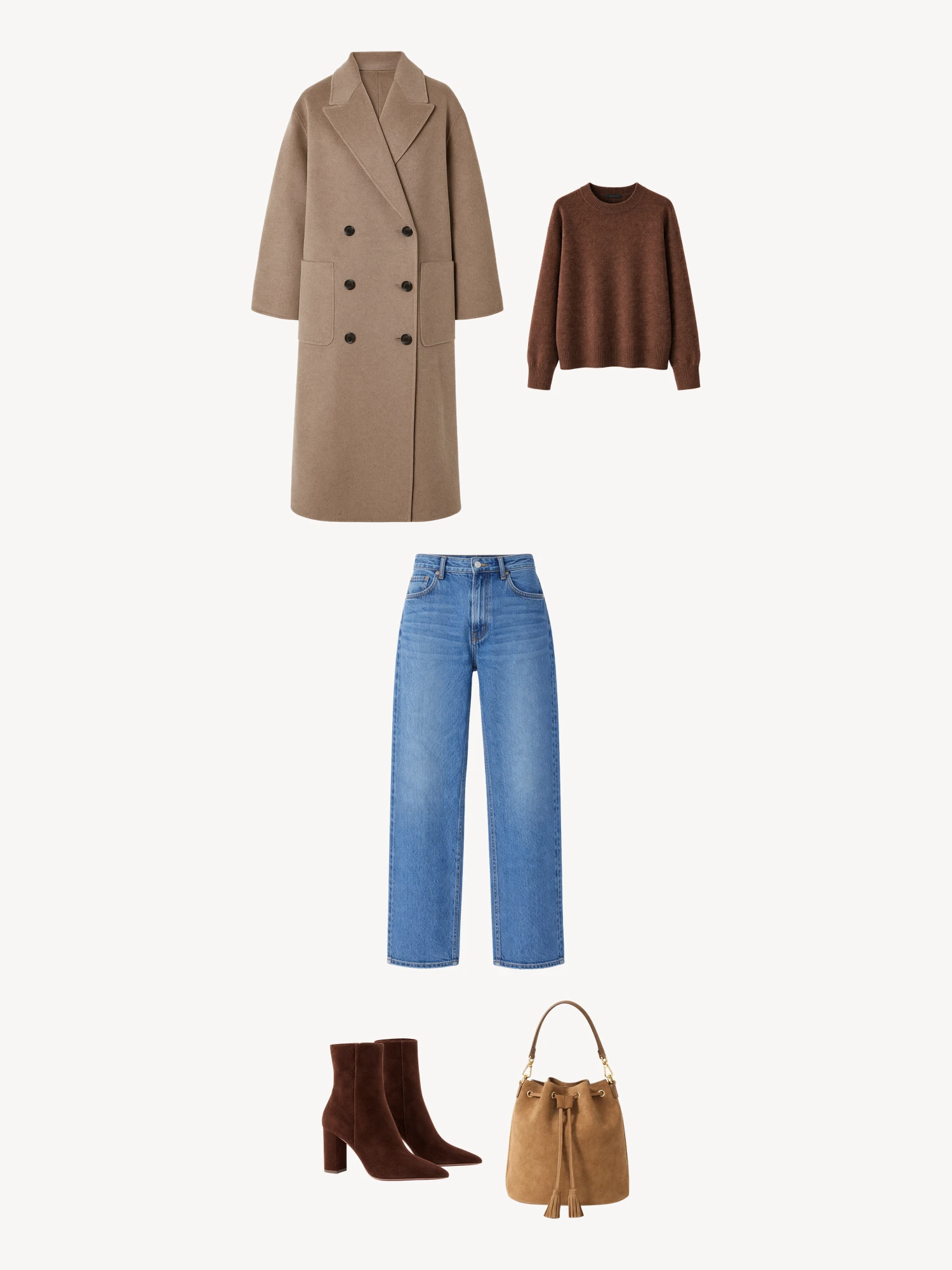
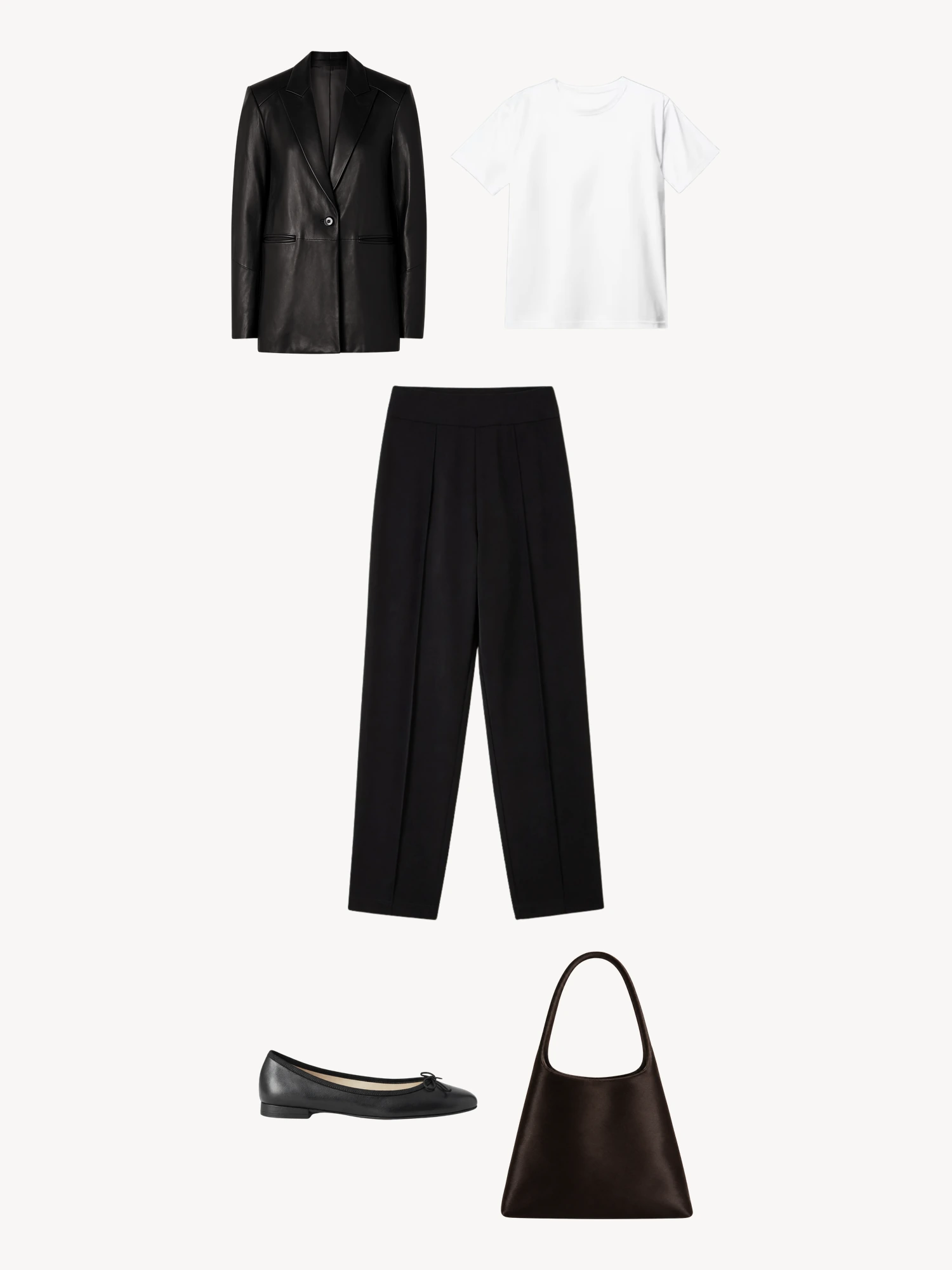
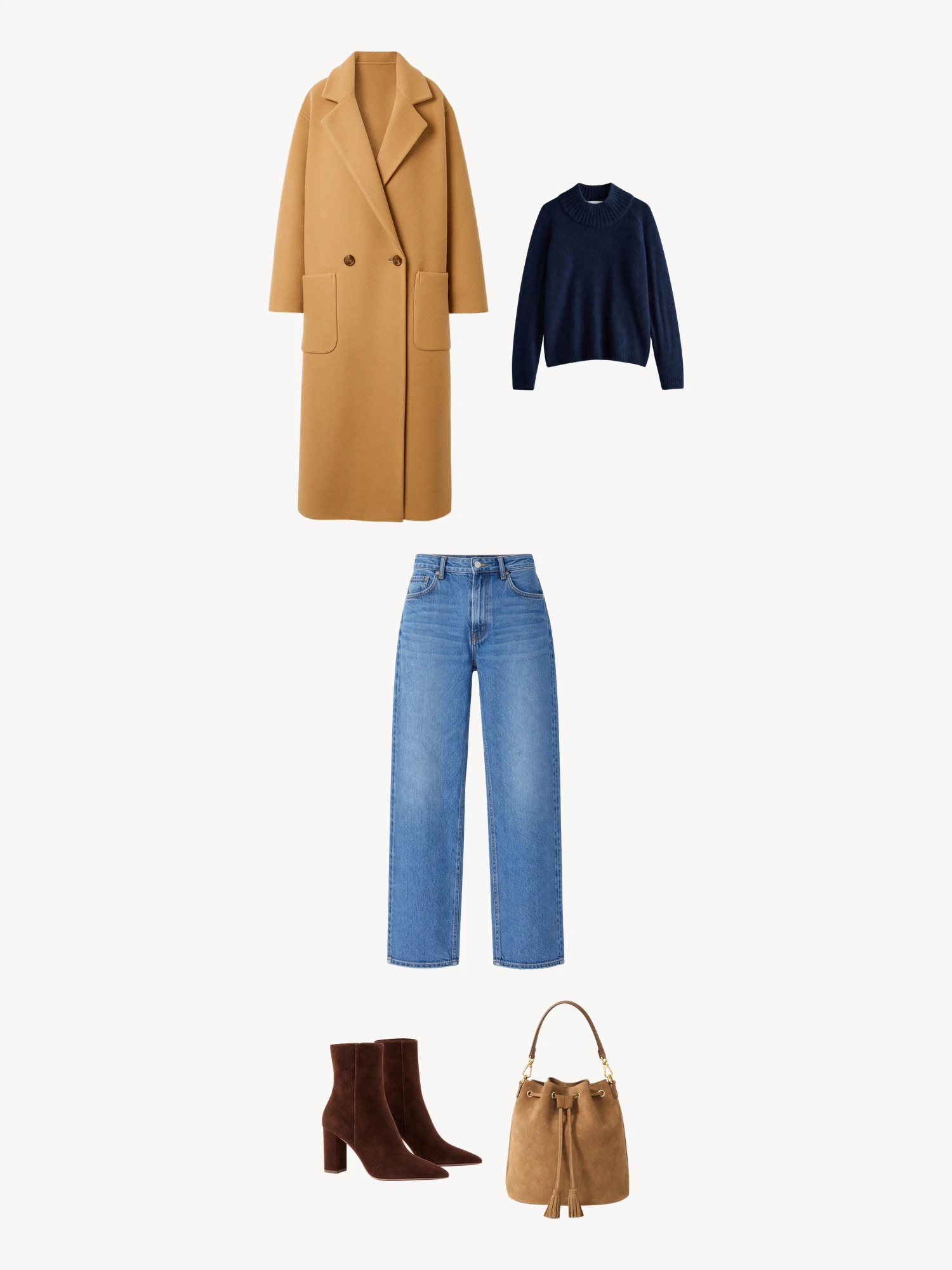
There’s usually a number. Thirty three pieces. Thirty seven. Ten. Forty. There’s usually a colour palette, often a calm mix of beige, white, grey, navy and black. There’s usually a list of essentials: the white shirt, the trench coat, the straight jeans, the cashmere jumper, the leather loafers, the little black dress. And somewhere on the page, often right next to that list, there’s a set of links or images showing you exactly where to buy every single item.
It’s a strange thing, when you stop to think about it. The capsule wardrobe is supposed to be about owning less and wearing more. And yet so many guides to it begin with a shopping trip.
The capsule wardrobe is supposed to be about owning less and wearing more.
This article isn’t an attack on anyone. Plenty of capsule guides are written with good intentions, and some of the ideas in them are genuinely useful. But it’s worth taking a clear look at why the format so often turns into a shopping list, which rules actually help, and what a capsule is really for.
Where the shopping list comes from
There are a few reasons capsule guides so often end in buying.
It’s how a lot of content is paid for. Many style articles earn money when readers click through and buy. That isn’t secret or wicked, it’s simply how much of the internet works. But it does mean there’s a gentle pressure for every guide to include things to buy, and a capsule list of essentials is a very natural place to put them.
A list is easy to write. Telling people to start from their own wardrobe is harder to turn into a neat article. Every wardrobe is different. A universal list of thirty pieces is simple, tidy and looks beautiful in photographs.
New things photograph well. A capsule shot with crisp, brand new pieces on matching hangers looks calm and aspirational. A real wardrobe, with its well loved jumpers and slightly faded jeans, is less glossy, even if it’s far more useful.
It promises a fresh start. There’s something appealing about the idea of beginning again with a perfect set of clothes. A shopping list offers that fantasy. Starting from what you own feels less magical, even though it usually works better.
None of these reasons are about what’s best for you or your wardrobe. They’re about how guides get made.
The rules, one by one
Let’s look at the most common capsule rules honestly, and keep the parts that help.
The magic number
Many guides give a specific number of pieces. It can be a useful starting point, because it encourages you to choose rather than keep everything. But there’s nothing special about any particular number. A capsule of twelve pieces and a capsule of forty can both work beautifully, depending on your life, your climate and how much you enjoy variety.
Keep: the idea of a deliberately small set.
Drop: the idea that there’s a correct number.
The neutral palette
Capsule guides often recommend neutral colours, because neutrals go with each other easily. That part is true and useful. But neutrals aren’t the only colours that work together, and a wardrobe of beige and grey isn’t for everyone.
Keep: the idea that your capsule’s colours should get along.
Drop: the idea that they have to be neutral. A capsule of greens, or blues, or bright colours that suit you, is just as valid.
The list of essentials
This is where most guides go furthest wrong. A universal list of essentials assumes that everyone needs the same clothes. But a white shirt is only essential if you love wearing white shirts. A trench is only essential if you live somewhere it makes sense and you feel like yourself in one.
Keep: the idea that some pieces work harder than others.
Drop: the idea that those pieces are the same for everyone. Your essentials are the pieces you already wear most.
The fresh start
Some guides suggest clearing out your wardrobe and starting again. That can feel satisfying, but it often means getting rid of perfectly good clothes and replacing them with new ones that do the same job.
Keep: the idea of looking at your wardrobe with fresh eyes.
Drop: the idea of throwing it out to make room for something new.
What the photographs leave out
The pictures that go with capsule guides are often lovely. Neat rails, matching hangers, perfectly pressed clothes in soft light. But it’s worth noticing what they don’t show.
They don’t show the jumper that has been your favourite for six years and has a small darn on one elbow. They don’t show the jeans that are slightly faded exactly where you like them. They don’t show the shoes that took months to wear in and are now the most comfortable thing you own.
Real wardrobes are lived in, and that’s a good thing. The pieces with a little wear on them are usually the ones doing the most work. A capsule built from those is less photogenic and far more useful than a rail of brand new clothes you’ve never tested in real life.
So if your own wardrobe doesn’t look like the pictures, don’t take that as a sign you need to start again. It’s a sign your clothes have been worn, which is exactly what clothes are for.
How to read a capsule guide
You don’t have to avoid capsule guides. Many have useful ideas. It just helps to read them with a few questions in mind.
Does it start from your wardrobe or from a list? A guide that asks you to look at what you already own first is usually more useful than one that hands you a list of things to buy.
Are the rules explained or just stated? Good advice tells you why. If a guide insists on a number or a palette without saying why, feel free to ignore it.
Who is it written for? A list of essentials written for someone with a very different life, climate or style from yours may simply not apply to you.
Where do the links go? If every item comes with a link to buy it, keep in mind that the guide may be partly an advert. That doesn’t make it wrong, but it’s worth knowing.
Take what helps and leave the rest. That’s how good advice should be used anyway. You know your own wardrobe, your own life and your own taste better than any guide ever could, so let them have the final say.
What a capsule is actually for
Once you strip away the shopping lists and the numbers, a capsule is a very simple and useful idea. It’s a small set of clothes that work well together, chosen on purpose, for a particular stretch of life.
That’s all. And it does several genuinely helpful things.
It makes getting dressed easier. Fewer choices, all of which work together, means faster, calmer mornings.
It makes more outfits from fewer pieces. When everything goes together, a few pieces can create many combinations.
It helps you see your own wardrobe. Choosing a capsule means looking properly at what you own, which often brings forgotten pieces back into use.
It helps you understand your style. Living with a small set for a while shows you what you love, what you reach for, and what you could happily live without.
It helps you buy better. When you know exactly what your capsule needs, any shopping you do is focused on real gaps, not on whatever looks appealing that day.
Notice that none of these benefits depend on buying anything. All of them work just as well, often better, when the capsule comes from your own wardrobe.
Why your own wardrobe is the better starting point
There are good reasons to start a capsule from what you already own, beyond saving money.
There’s more there than you think. A large survey by Vestiaire Collective in 2026 found that people underestimate what’s in their own wardrobe by about 40 per cent. Many of us own far more useful pieces than we remember.
A lot of it is waiting to be worn. WRAP, the UK’s waste and resources programme, found in its 2012 study Valuing Our Clothes that around 30 per cent of the clothing in people’s wardrobes hadn’t been worn for at least a year. A capsule is a lovely way to bring some of those pieces back.
Wearing what you own makes a difference. The same WRAP research found that keeping clothes in active use for nine months longer cuts their carbon, water and waste footprints by 20 to 30 per cent each. A capsule built from your own clothes is, very simply, a way of wearing them more.
You already know these clothes. You know what fits, what’s comfortable, what lasts and what you love. That knowledge is far more valuable than a list written by someone who has never seen your wardrobe.
How to build one without buying anything
If you’d like to try a capsule the honest way, here’s a short version of the method.
Choose a purpose and a time. The next month, the next season, a trip, a busy few weeks at work.
Pull out what you already wear most. These are your anchors, and they set the colours and feeling of your capsule.
Find your connectors. The pieces that go with almost everything. They’re what turn a few clothes into many outfits.
Add a few things you love. Pieces that bring colour, texture or personality, as long as they go with several anchors.
Test it by making outfits. Count combinations. Swap out anything that only works with one thing.
Live in it. Wear it for the time you planned, and notice what works and what doesn’t.
Only then, consider buying. If one real gap keeps coming back, fill it carefully, with something that works with what you already have. Buy to keep, not to throw away.
When buying is genuinely right
To be fair, there are times when buying something for a capsule is the right thing to do.
Sometimes clothes wear out. Sometimes your body or your life changes, and what you own no longer works. Sometimes a capsule shows you a real, repeated gap, like the lack of a warm layer or a comfortable pair of trousers.
In those cases, buying makes sense. The difference is the order. The honest capsule starts with your wardrobe and buys last, for a specific reason. The shopping list capsule starts with buying and treats your wardrobe as an afterthought.
A note on our own approach
It would be strange to write this without being clear about WATOWEAR, because we do have a Shop in the app.
Here’s how we think about it. The first place Chloé looks is always your own wardrobe. When you build a capsule in the app, she works from the clothes you already own, helping you choose pieces that go together and suggesting outfits from that small set. Only when there’s a genuine gap does the app help you find something to fill it. If you buy through us we may earn a commission, and it never changes what you pay. But buying is the last step, not the first, and that order matters to us.
Where Chloé comes in
WATOWEAR starts where most capsule guides end: with what you already own.
Once your clothes are in the app, Chloé builds a capsule for a week, a trip or a season from your own pieces, and shows you the outfits it makes. No universal list to follow, and no shopping trip to begin.
When something is truly missing, she says so, and the app can help you find it. If you buy through us we may earn a commission, and it never changes what you pay. But your wardrobe always comes first.
A capsule is a tool, not a uniform
The capsule wardrobe is a genuinely good idea that has collected a lot of unnecessary baggage. Strip away the shopping lists, the magic numbers and the universal essentials, and what’s left is simple and useful: a small, chosen set of clothes that work together.
You can build one from your own shelves this weekend. You don’t need a list, a palette or a single new purchase. You just need your own wardrobe, an hour or two, and a little attention.
The best capsule isn’t the one in the photograph. It’s the one made of the clothes you already love.
- Vestiaire Collective consumer survey of more than 5,000 people, 2026, reported in Forbes and Retail Brew: wardrobes underestimated by about 40 per cent.
- WRAP, Valuing Our Clothes, 2012, consumer research with 7,950 UK adults: about 30 per cent of clothing unworn for at least a year; nine months more wear cuts carbon, water and waste footprints by 20 to 30 per cent each.