

What it means when you keep wearing the same five things
Wearing the same few pieces is usually a signal about fit and comfort, not a lack of imagination. What your favourites are telling you, and how to use it.
By Chloé Sasaa · 27 October 2026 · 11 min read

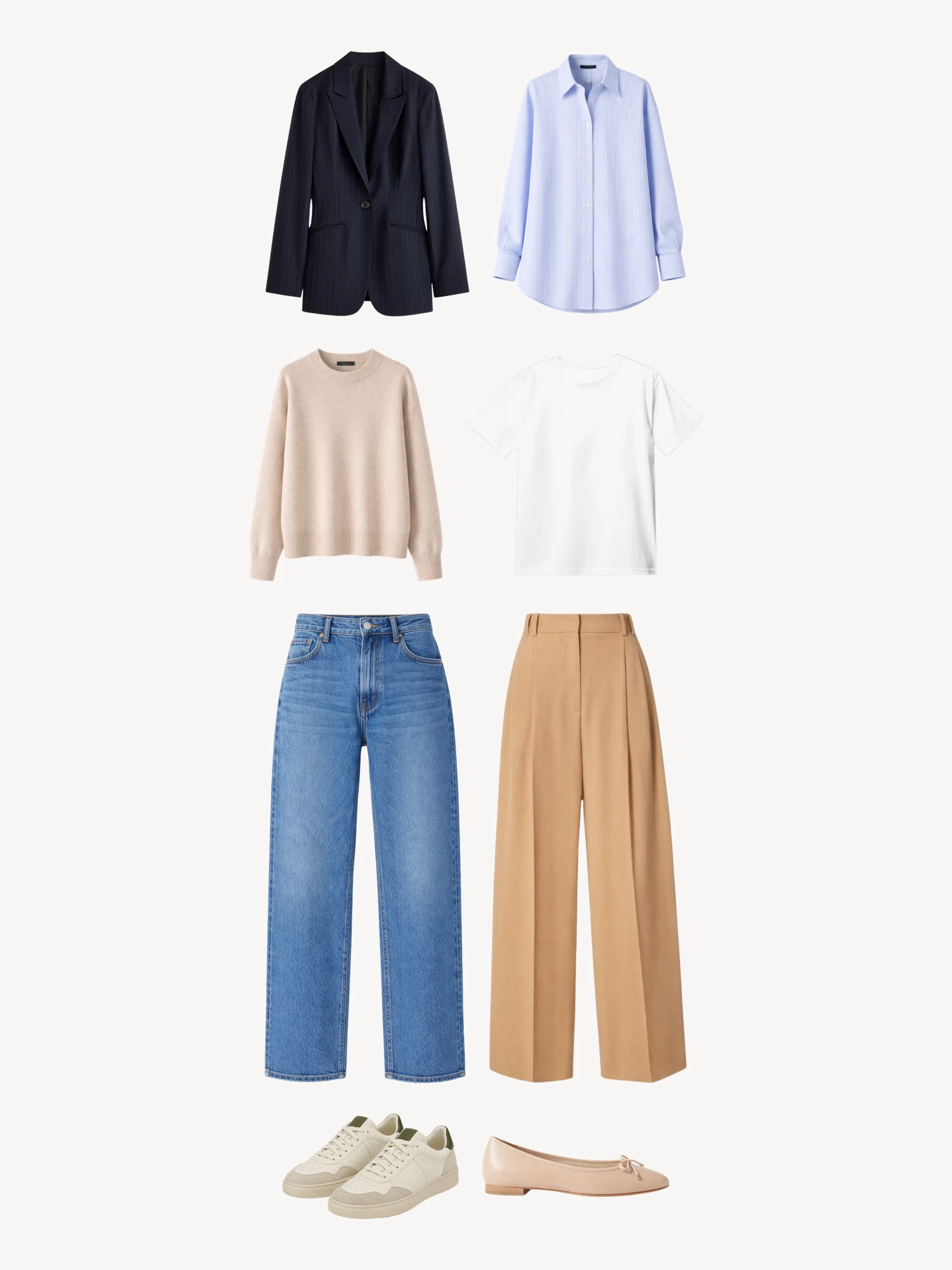
Navy blazer, white tee, navy knit, jeans and trainers.
You have a wardrobe full of clothes. And yet, if you’re honest, you wear about five of them.
The same jeans. The same two tops, maybe three. The same jumper. The same shoes. Week after week, they go round and round, while the rest of your wardrobe waits patiently, unworn.
Maybe you’ve felt a little guilty about it. As if it means you’re boring, or uncreative, or bad at clothes. As if a better dressed person would be wearing something different every day.
I’d like to suggest a kinder way of looking at it. Wearing the same few things isn’t usually a failure of imagination. It’s information. Your favourites are telling you something important about what you need from your clothes. And once you understand what they’re saying, you can use it.
You’re not alone
First, it’s worth knowing how common this is. In 2012, WRAP, the UK’s waste and resources programme, studied the clothing habits of nearly eight thousand adults. They found that around 30 per cent of the clothing in people’s wardrobes hadn’t been worn for at least a year.
So if your wardrobe has a busy front section of favourites and a quiet back section that rarely moves, you’re in very good company. That’s simply what most wardrobes look like.
The question isn’t why you’re doing something wrong. It’s what your favourites have that the rest of your clothes don’t.
What your favourites are telling you
When certain clothes get worn again and again, there’s almost always a reason. Usually it comes down to a few things.
They fit. This is often the biggest one. The favourites fit your body as it is now. They don’t pinch, ride up, slip off, or need adjusting. You can put them on and forget about them.
They’re comfortable. Not just in fit, but in fabric and feel. They’re soft where you want soft, structured where you want structure. They feel good to wear all day.
They suit your real life. Your favourites work for the things you actually do. Your commute, your work, your weekends, your weather. They’re not clothes for an imagined life, they’re clothes for this one.
They’re not clothes for an imagined life, they’re clothes for this one.
They go together. Often your five favourites work with each other. You can mix and match them without thinking, which makes mornings easy.
They make you feel like yourself. When you wear them, you look in the mirror and see you.
They’re easy. No ironing, no special care, no complicated layering. Easy clothes get worn.
If you look at your favourites and ask why they’re favourites, you’ll usually find several of these reasons at once.
What the rest are telling you
The clothes you don’t wear are telling you something too. Often, they’re missing one of the qualities above.
They don’t quite fit. Maybe they fitted once, or never did. Maybe they’re slightly too tight, too loose, too long. Even a small fit problem can stop something being worn.
They’re uncomfortable. Scratchy fabric, a tight waistband, shoes that rub. Discomfort is one of the strongest reasons clothes get left behind.
They suit a different life. Clothes for an office you no longer go to, or for a social life you imagined but don’t really have, or for a climate you don’t live in.
They don’t go with anything. Lovely on their own, but hard to put into an outfit with the rest of your wardrobe.
They’re difficult. They need ironing, special washing, careful layering, or a particular pair of shoes you don’t own.
They don’t feel like you. Bought for a version of you that you thought you should be, or because someone else looked good in them.
None of these mean the clothes are bad. They mean the clothes aren’t right for you, right now, in the way your favourites are.
Your favourites are a recipe
Here’s the useful part. Once you understand why your favourites work, you have a recipe for your wardrobe.
Look closely at your five favourites. Write down what they have in common. The fit, the fabric, the colours, the shapes, the level of formality, how easy they are to care for.
You might find, for example, that your favourites are all soft, relaxed in fit, in dark colours, and machine washable. Or that they’re all structured, smart, and in a few colours that go together. Whatever the pattern is, it’s yours.
Try to be specific. Not just “comfortable”, but what kind of comfortable: a waistband that stretches, a fabric that doesn’t crease, a length that lets you move. The more precise the recipe, the more useful it becomes.
That pattern tells you what to look for in the future. When you’re choosing what to wear from the rest of your wardrobe, look for pieces that share those qualities. When you’re thinking of buying something new, ask whether it matches the recipe. If it does, it has a good chance of becoming a favourite too.
Bringing other pieces into rotation
Knowing your recipe also helps you bring some of the quieter pieces back.
Go through the clothes you rarely wear and sort them by what’s missing.
If it’s fit, see whether a simple alteration would fix it. A hem, a waist taken in, sleeves shortened. Sometimes a small change turns a forgotten piece into a favourite.
If it’s that it doesn’t go with anything, try pairing it with your favourites. Your five reliable pieces are probably great connectors. A forgotten top might work beautifully with your favourite jeans.
If it’s difficult, decide whether it’s worth the effort. Sometimes it is, for something special. Sometimes it isn’t, and that’s fine.
If it doesn’t suit your life, be honest. It may be time to pass it on to someone whose life it does suit.
If it’s uncomfortable, think about whether the discomfort can be solved. If not, let it go.
Is wearing the same things a problem?
Not necessarily. For many people, a small set of trusted favourites is exactly right. It makes mornings easy, reduces decisions, and means you always feel good in what you’re wearing.
Plenty of people choose to dress this way on purpose. They find what works and wear it happily, again and again. That’s a style in itself, and a very sensible one.
It only becomes a problem if it bothers you. If you feel stuck, or bored, or you wish you were wearing more of what you own, then it’s worth looking at. And if you have a wardrobe full of clothes you never wear, it might be worth asking whether you need so many, or whether some of them would be happier with someone else.
The worry about being seen in the same thing
One reason people feel uncomfortable wearing their favourites often is a worry that others will notice.
Honestly, most people won’t. They’re thinking about their own day, their own clothes, their own worries. Even if they do notice, they’re far more likely to think you look good than to think anything negative.
And there’s something quietly confident about wearing what you love, often. It says you know what suits you. Some of the people we find most stylish are those who have a recognisable way of dressing, built around a few pieces they wear constantly.
A personal uniform, on purpose
Some people take the five favourites idea and turn it into a choice. They decide on a personal uniform: a small set of pieces, or one particular combination, that they wear most days.
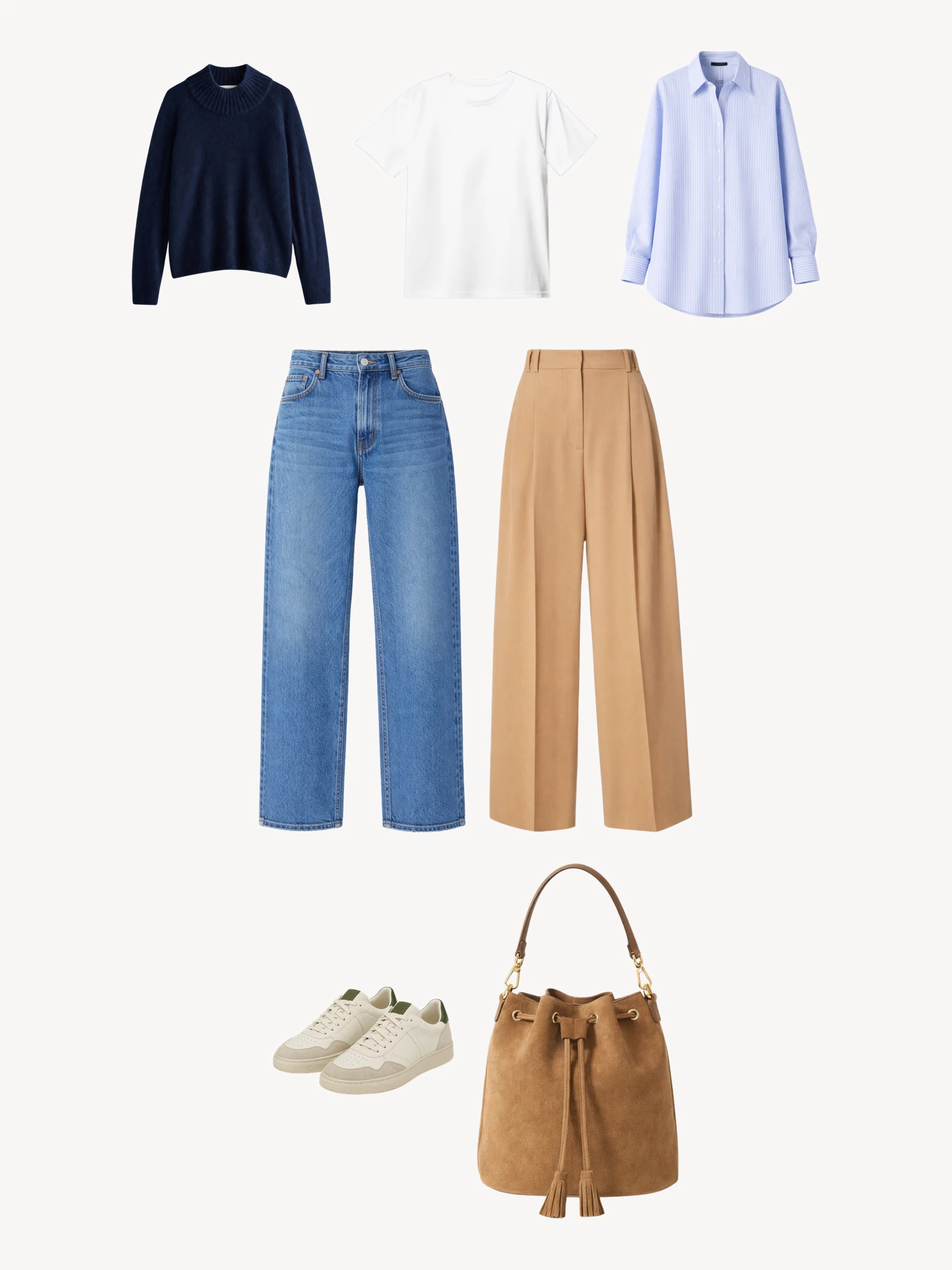
It might be dark trousers, a plain top and a jacket. It might be jeans, a striped shirt and trainers. It might be a simple dress and a cardigan. The details matter less than the idea. You know what works, so you wear it, and you put your energy into everything else.
A personal uniform isn’t for everyone. Some people love variety and would find it dull. But if you already wear the same five things, it can help to see that as a style rather than a rut. You’re not failing to be creative. You’ve found something reliable, and reliable is valuable.
The guilt about the rest
For many people, the hardest part isn’t wearing the same five things. It’s the feeling about everything else. The money spent, the clothes that hang there unworn, the sense that you should be making more use of them.
That guilt doesn’t help anyone, and it rarely gets clothes worn. It just makes opening the wardrobe a little heavier.
So try swapping guilt for a decision. For each unworn piece, choose one of three paths: try it with your favourites this month, fix whatever stops you wearing it, or pass it on to someone who will. Any of those is better than leaving it to hang there quietly reproaching you.
One small experiment a week
If you’d like to widen your rotation without losing the comfort of your favourites, try a small, low pressure experiment.
Once a week, swap just one of your five favourites for something you haven’t worn in a while. Keep the other four the same. So the outfit still feels familiar and safe, but one piece is new to your week.
Notice how it feels. If you like it, it can join the rotation. If you don’t, you’ve learned something, and you can try a different piece next week.
Over a couple of months, you might find your five favourites quietly become eight or ten, without ever feeling as if you had to change who you are.
When your favourites wear out
The downside of wearing the same things is that they wear out faster. And when a favourite reaches the end of its life, it can feel like a real loss.
This is where your recipe becomes especially useful. You know exactly what made that piece work. So when you replace it, you can look for something with the same qualities: the same fit, fabric, colour or feel.
Look after your favourites, too. Because they work so hard, they deserve gentle washing, good storage and early repairs. A favourite that lasts twice as long is twice as valuable.
When it’s time for a change
Sometimes wearing the same five things is a sign that something has shifted. Your body has changed, your life has changed, your taste has changed, and only a few pieces still fit who you are now.
If that’s the case, your favourites are showing you where you are today. They’re a starting point for building a wardrobe that suits your current life, rather than one stuck in the past.
You don’t need to change everything at once. Use your favourites as a guide, add slowly, and let the wardrobe catch up with you. A wardrobe that grows from what already works tends to feel like yours from the very first day.
Where Chloé comes in
Your favourites are useful clues, and WATOWEAR is built to use clues like these.
Chloé builds outfits from all the clothes you own, not just the five you always reach for. So she might suggest one of your favourites with a piece you’d forgotten, giving that forgotten piece a way into your life. If a suggestion doesn’t feel like you, you can change a piece or ask for a different direction, and that helps you understand your own taste even better.
And when an outfit works, you can save it to your favourites in the app, so your best combinations are always easy to find.
Listen to your favourites
Wearing the same five things isn’t a sign that you’re bad at clothes. It’s a sign that you’ve found what works.
So instead of feeling guilty, get curious. Ask what your favourites have in common. Use that as a recipe. Bring forgotten pieces back by pairing them with what you love. And when you buy, look for more of what already works.
Your favourites have been quietly teaching you about your own style all along. It’s worth listening.
- WRAP, Valuing Our Clothes, 2012, consumer research with 7,950 UK adults: about 30 per cent of clothing unworn for at least a year.